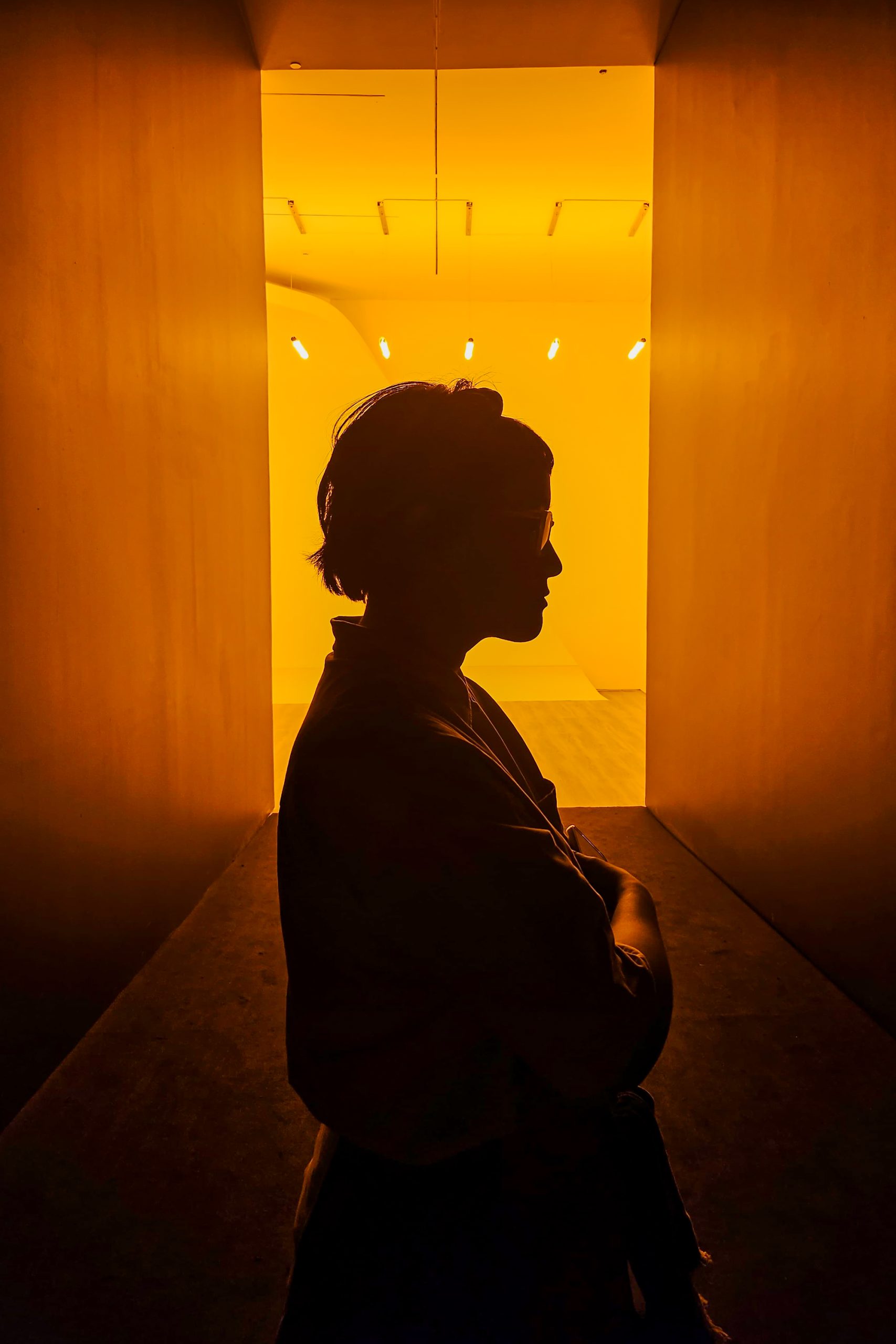
Once the calendar changed to 2026, somehow I hit the ground running by immediately visiting the first exhibition of the year. My sister was in town, so we wasted no time spending time with each other and made our way to Museum Macan—which is an art gallery I’ve always wanted to visit but never seemed to have the chance to. However, when I learnt last year that Olafur Eliasson was coming, I was determined to go at some point—and away we went. If you remember, I’ve actually been here before for PACU TUKU, but we sped past the entire exhibition that we almost didn’t see anything 🥲 This time, though, I was determined to enjoy every piece as best I could. So here we go.

Once the calendar changed to 2026, somehow I hit the ground running by immediately visiting the first exhibition of the year. My sister was in town, so we wasted no time spending time with each other and made our way to Museum Macan—which is an art gallery I’ve always wanted to visit but never seemed to have the chance to. However, when I learnt last year that Olafur Eliasson was coming, I was determined to go at some point—and away we went. If you remember, I’ve actually been here before for PACU TUKU, but we sped past the entire exhibition that we almost didn’t see anything 🥲 This time, though, I was determined to enjoy every piece as best I could. So here we go.

📷 ASUS ZenFone 10 50 MP f/1.9, (23.8 mm lens) +
A Time to Reflect
I don’t remember when I first discovered Olafur Eliasson, but I remember seeing his Rainbow Panorama (2006-2011) artwork on TV and was mesmerised instantly. While it wasn’t one of his notable works—as often mentioned by media—it certainly is my favourite. So when I found out that he would be bringing his works to this side of the world, I almost couldn’t believe it. While he is probably most well known for his works that use light and colours, Eliasson actually likes to explore art’s relevance in the global context as a whole, in the form of installation, painting, sculpture, photography and film—all of which can be found in this exhibition.
A little bit about the artist. Olafur Eliasson (born in 1967, only a year younger than my later mother) is an Icelandic-Denmark artist who has exhibited his works since 1997. Some of his notable works include The weather project (exhibited at Tate Modern London in 2003), The New York City Waterfalls (exhibited in Brooklyn and Manhattan in 2008), Ice Watch (exhibited in multiple sites in London in 2014). You can see the range of his art discipline through these aforementioned works.
In 1995, Eliassion founded Studio Olafur Eliasson (based in Berlin) which consists of craftspeople and specialized technicians, architects, archivists and art historians, cooks and film-makers—really a wide range of specialities.
I don’t remember when I first discovered Olafur Eliasson, but I remember seeing his Rainbow Panorama (2006-2011) artwork on TV and was mesmerised instantly. While it wasn’t one of his notable works—as often mentioned by media—it certainly is my favourite. So when I found out that he would be bringing his works to this side of the world, I almost couldn’t believe it. While he is probably most well known for his works that use light and colours, Eliasson actually likes to explore art’s relevance in the global context as a whole, in the form of installation, painting, sculpture, photography and film—all of which can be found in this exhibition.
A little bit about the artist. Olafur Eliasson (born in 1967, only a year younger than my later mother) is an Icelandic-Denmark artist who has exhibited his works since 1997. Some of his notable works include The weather project (exhibited at Tate Modern London in 2003), The New York City Waterfalls (exhibited in Brooklyn and Manhattan in 2008), Ice Watch (exhibited in multiple sites in London in 2014). You can see the range of his art discipline through these aforementioned works.
In 1995, Eliassion founded Studio Olafur Eliasson (based in Berlin) which consists of craftspeople and specialized technicians, architects, archivists and art historians, cooks and film-makers—really a wide range of specialities.


This exhibition is Eliasson’s first traveling grand solo exhibition in the Asia Pacific—starting in Taipei—that encompasses the main themes of the last three decades of his career and artistic journey. With a total of 16 exhibited artworks, Eliasson combines natural elements, light, colour and motion to raise awareness on the environment. A lot of his artwork, in fact, invites visitors to engage with them, allowing us to see brand new perspectives and expanding our horizon. Obviously—as is the usual crowd who goes to Macan—most of them are only here for a good photo. That works too, of course, but it often defeats the purpose of the artwork.
Meanwhile, my sister and I took our time at each piece. A lot of the time, we argued about what we believed each artwork represents—fully missing out on its explanation written in the exhibition guide (lol). We admired the contraptions that Eliasson came up with to create beautiful visuals and light reflections that most people probably wouldn’t even think about or notice. His keen eye on details, especially regarding light and colour, is simply brilliant.


This exhibition is Eliasson’s first traveling grand solo exhibition in the Asia Pacific—starting in Taipei—that encompasses the main themes of the last three decades of his career and artistic journey. With a total of 16 exhibited artworks, Eliasson combines natural elements, light, colour and motion to raise awareness on the environment. A lot of his artwork, in fact, invites visitors to engage with them, allowing us to see brand new perspectives and expanding our horizon. Obviously—as is the usual crowd who goes to Macan—most of them are only here for a good photo. That works too, of course, but it often defeats the purpose of the artwork.
Meanwhile, my sister and I took our time at each piece. A lot of the time, we argued about what we believed each artwork represents—fully missing out on its explanation written in the exhibition guide (lol). We admired the contraptions that Eliasson came up with to create beautiful visuals and light reflections that most people probably wouldn’t even think about or notice. His keen eye on details, especially regarding light and colour, is simply brilliant.


Hand-me-down shirt + jacket | Bobo Tokyo skirt (defect sale) | Noesa bandana | ASICS GEL-NYC™ sneakers | photos of me by Akita


Hand-me-down shirt + jacket | Bobo Tokyo skirt (defect sale) | Noesa bandana | ASICS GEL-NYC™ sneakers | photos of me by Akita
Our Favourite Pieces
#1: Multiple shadow house
2010
This is a 3-part interactive piece that utilises colourful lights to create really interesting shadow play. The artwork takes part in a dark room, save for the technicolour lights being shot onto the screen on the opposite wall. The room is divided into 3 parts, each one showcasing different colour combinations—one of them even has a different light setting to create a whole other shadow play than the other two parts.
Without a doubt, this was one of the most popular installations being displayed in the exhibition. Everyone was taking turns making different poses and having their photos taken here. It’s just so fun! My sister was so in awe of this work that she had to see each of the light fixtures, just to know exactly how the lights and shadows worked. It was also my favourite challenge during PACU TUKU.
#1: Multiple shadow house
2010
This is a 3-part interactive piece that utilises colourful lights to create really interesting shadow play. The artwork takes part in a dark room, save for the technicolour lights being shot onto the screen on the opposite wall. The room is divided into 3 parts, each one showcasing different colour combinations—one of them even has a different light setting to create a whole other shadow play than the other two parts.
Without a doubt, this was one of the most popular installations being displayed in the exhibition. Everyone was taking turns making different poses and having their photos taken here. It’s just so fun! My sister was so in awe of this work that she had to see each of the light fixtures, just to know exactly how the lights and shadows worked. It was also my favourite challenge during PACU TUKU.
#2: Circumstellar resonator
2018
Another great installation that shows Eliasson’s deep understanding of light and colour. I think, originally, this artwork should’ve been placed somewhere with white, neutral lighting. Using only two lights with varying colours, a circular glass of some kind and reflection, Eliasson manages to create such a wild and amazing pattern. The light reflected on the wall is the artwork, but also the contraption that looks simple but is able to create such a beautiful ripple effect.
My sister and I spent quite a long time here, trying to understand how the contraption works to be able to produce such a beautiful and mystifying reflection. We also spent a good minute trying to determine whether the colour of the light is green or yellow—the Yellow Corridor just beside it kind of distorts the colour. Fun fact: if you walk from one side to another in front of the artwork, the glass looks like it’s moving.
#2: Circumstellar resonator
2018
Another great installation that shows Eliasson’s deep understanding of light and colour. I think, originally, this artwork should’ve been placed somewhere with white, neutral lighting. Using only two lights with varying colours, a circular glass of some kind and reflection, Eliasson manages to create such a wild and amazing pattern. The light reflected on the wall is the artwork, but also the contraption that looks simple but is able to create such a beautiful ripple effect.
My sister and I spent quite a long time here, trying to understand how the contraption works to be able to produce such a beautiful and mystifying reflection. We also spent a good minute trying to determine whether the colour of the light is green or yellow—the Yellow Corridor just beside it kind of distorts the colour. Fun fact: if you walk from one side to another in front of the artwork, the glass looks like it’s moving.
A Play of Light & Shadow

I love the way Eliasson sees the world. He seems to be so well acquainted with light and colour to understand exactly what he needs to do to create unexpected forms, patterns, shadows and reflection. Yet, somehow, you can tell from some of his works, how unserious he can often be. All of his works seem to be injected with an element of fun. My friend Agung Hartamurti, who got a chance to meet the artist while covering the exhibition opening for Whiteboard Journal, told me that the man is so full of playful glee. That is somehow translated so well in his works. Honestly, that’s part of their beauty.


I love the way Eliasson sees the world. He seems to be so well acquainted with light and colour to understand exactly what he needs to do to create unexpected forms, patterns, shadows and reflection. Yet, somehow, you can tell from some of his works, how unserious he can often be. All of his works seem to be injected with an element of fun. My friend Agung Hartamurti, who got a chance to meet the artist while covering the exhibition opening for Whiteboard Journal, told me that the man is so full of playful glee. That is somehow translated so well in his works. Honestly, that’s part of their beauty.


Your Curious Journey Exhibition is available until 12 April 2026,
with 2 additional exhibits coming up. Come visit if you have the chance!


Your Curious Journey Exhibition is available until 12 April 2026,
with 2 additional exhibits coming up. Come visit if you have the chance!
